Designed around lead data
Page layouts, calls to action and forms are based on what wins enquiries in the campaigns we manage, not on guesswork.

Web design · Perth
We also run Google Ads, Meta and SEO for Perth businesses. So every site we build is planned around real data on what makes people call or fill in the form.
Custom websites from $4,950 + GST. Live in as little as 2-3 weeks.
Websites, ads and SEO under one roof
Why Caffeinate
Most web designers hand over a nice-looking site and move on. We run the Google Ads, Meta campaigns and SEO that send people to sites like yours every day. So we know which pages, headlines and forms turn a visit into an enquiry, and we build that in from the first wireframe.
Page layouts, calls to action and forms are based on what wins enquiries in the campaigns we manage, not on guesswork.
GA4, Google Ads conversions and call tracking are live on day one, so you can see which visits become leads.
Fast pages and focused service sections mean your ad spend lands on a page built to convert, not a brochure.
The people who built your site and the people running your ads work together as one team, so problems get fixed rather than passed around.
Our work
Real sites for real Perth businesses, each with the result it delivered. Hover a site to scroll it.
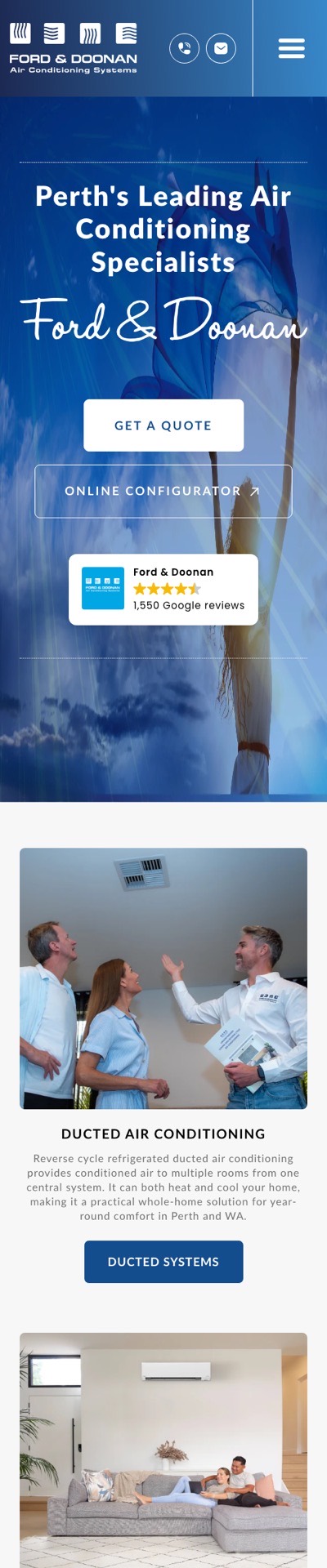
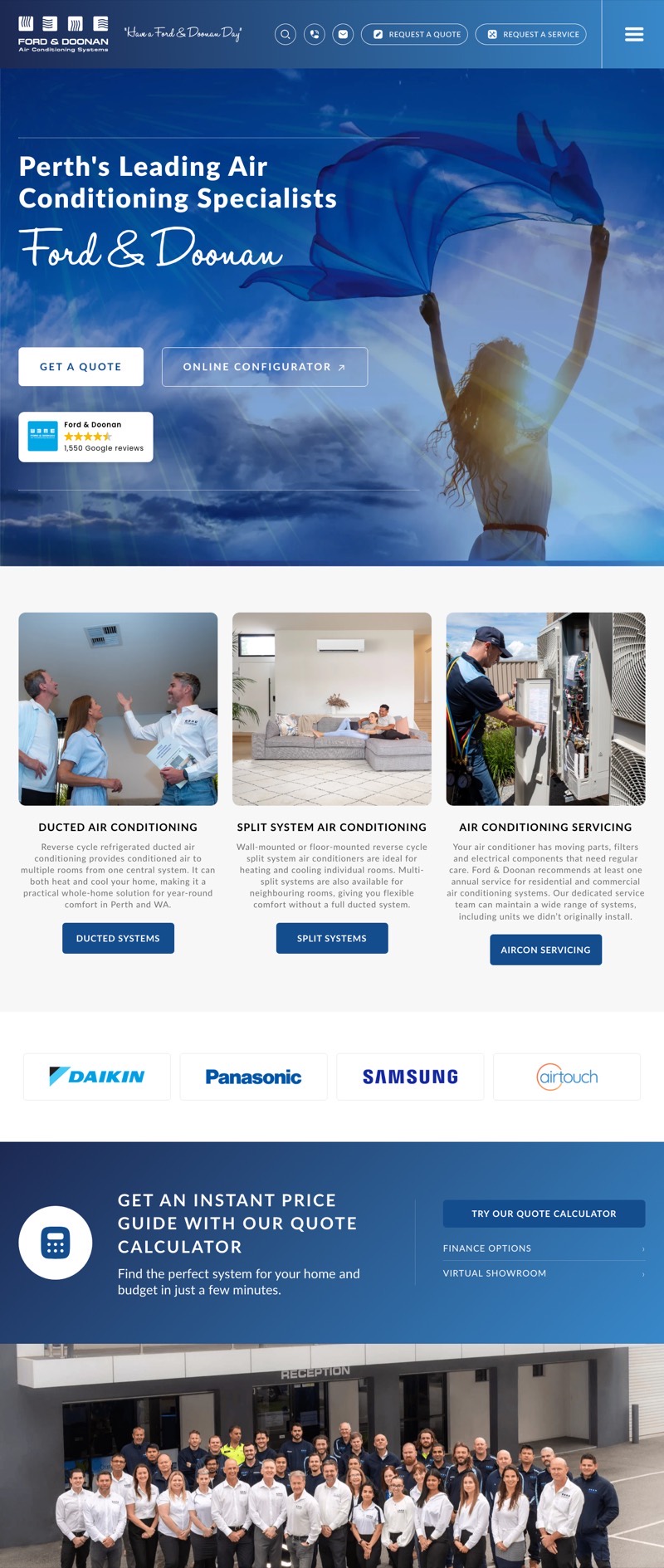
Air conditioning · Perth and South West
14x more website traffic since they joined us in 2021
The client
One of WA's best-known air conditioning brands, 40 years in business, with 12 locations from Joondalup to Busselton.
What we built
A custom WordPress site with an online quote calculator, a page for every system type and every location, finance options, a virtual showroom and live Google reviews.
Visit fordanddoonan.com.au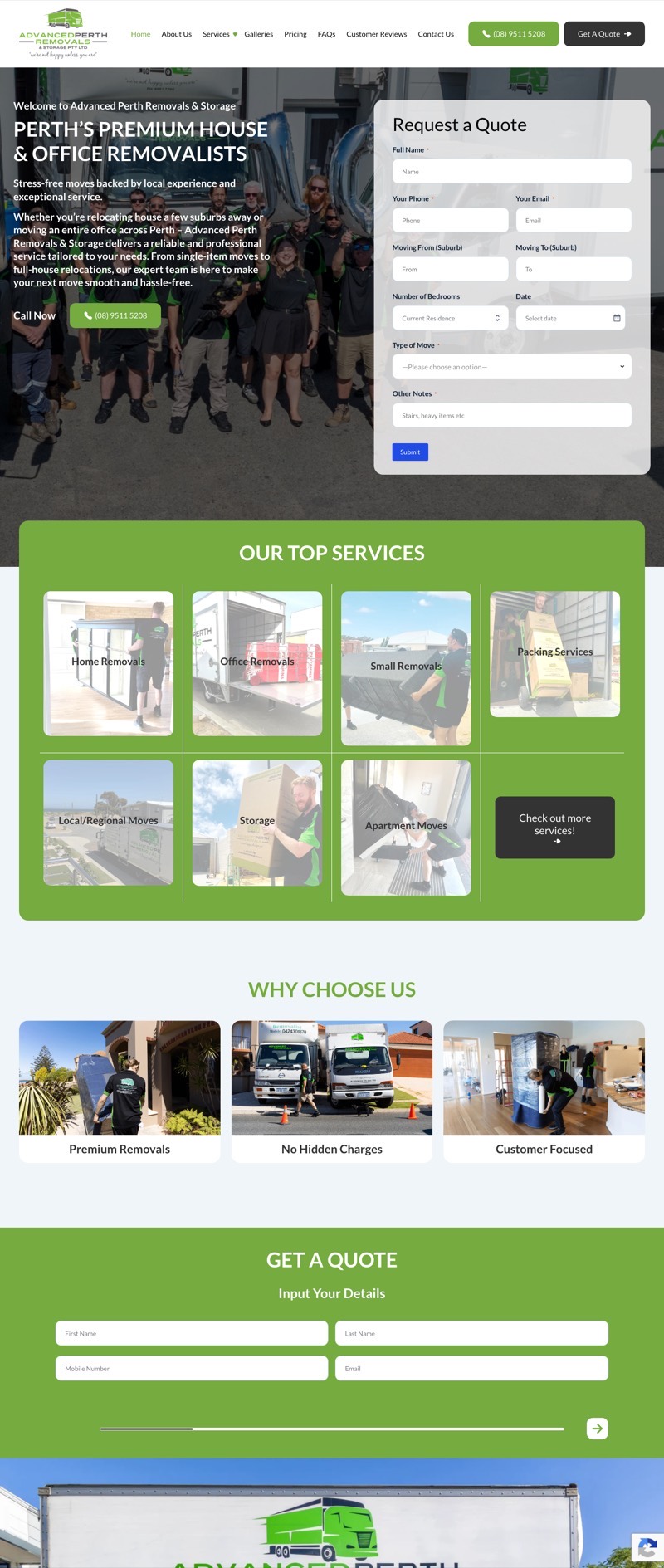
Removals and storage
4.1x more website traffic since 2024. Designed, built and managed by Caffeinate, with 9 service pages, a pricing page and online quotes.
Visit live site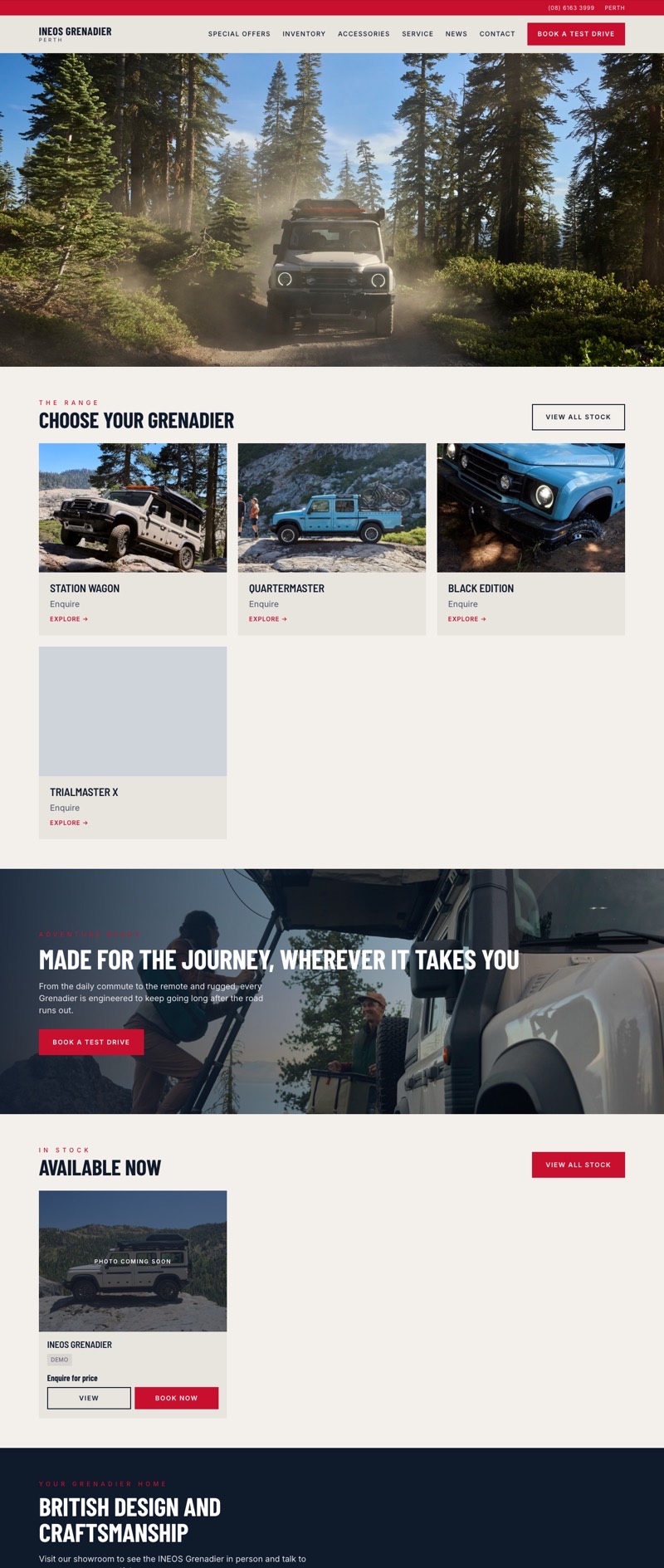
Vehicle dealership
Built on our own dealer platform, with live stock, test drive and service bookings.
Visit live site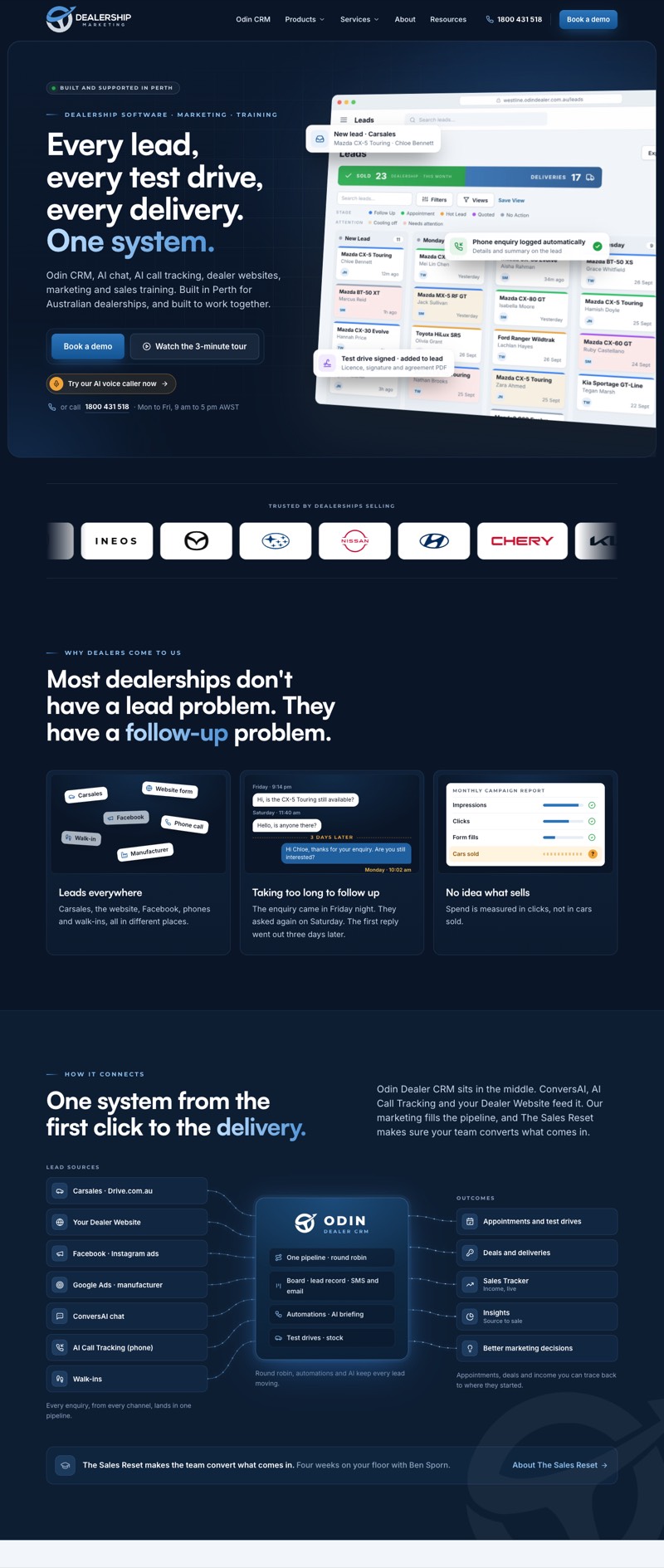
Automotive marketing and software
Our own automotive brand, rebuilt by Caffeinate with pages for Odin CRM, AI chat, AI call tracking and dealer websites.
Visit live sitePricing
Clear starting prices, so you know where you stand before we talk. Your fixed quote comes after a short discovery call.
Local service businesses that need a professional site fast
From $4,950 + GST
Live in 2-3 weeks
Established businesses replacing an older site
From $9,950 + GST
Live in 4-6 weeks
Bigger brands, online stores and sites with custom features
From $19,950 + GST
Live in 8-12 weeks
Timelines run from when your content (text and photos) is signed off.
How it works
Get your instant estimate, then a 30-minute call to pin down your goals, pages and must-haves. You get a fixed-price quote.
We map your pages around the searches and enquiries that matter to you, then design your key pages for you to review on your own phone and laptop.
We build on WordPress, add your content, set up tracking and test every form and call button.
We go live, redirect your old pages so your rankings carry across, and check your enquiry numbers after launch. Want more traffic? We can run your ads and SEO too.
Every build
Built to load quickly on mobile, aiming for a 90+ Lighthouse score and Google's Core Web Vitals in the green.
Clean page structure, titles, descriptions and schema on every page, plus redirects so a redesign keeps your rankings.
Structured sections your team can update without breaking the layout or calling a developer.
Lighter pages that load faster and don't look like everyone else's.
Built to WCAG 2.1 AA: readable contrast, keyboard navigation and screen-reader support.
SSL, security monitoring and backups from launch day.
Website questionnaire
Choose how much you'd like to tell us. Both options end with your price range.
Step 1 · Pick a path
No obligation. Your answers go straight to Ben at Caffeinate.
FAQ
Our sites start from $4,950 + GST for a service business site of up to 8 pages, $9,950 for a fully custom 10 to 20 page site, and $19,950 for online stores and custom builds. Template sites around Perth often start near $3,000. Your price depends on pages, features and whether we’re moving an existing site, and the instant estimate gives you a range in about a minute.
Starter sites go live in 2-3 weeks, Growth sites in 4-6 weeks and Custom or eCommerce builds in 8-12 weeks, counted from when your content is signed off. Waiting on content is the most common delay, so we give you a checklist on day one.
Usually, yes. Your team already knows the editor, and it stays fast when built properly. Online stores are built on WooCommerce or Shopify, whichever suits your products.
Yes. Every redesign includes a full crawl of your old site, a redirect for every page and checks after launch, so your rankings carry across and nothing breaks.
Yes. Hosting & care starts at $99 a month + GST and covers hosting, WordPress and plugin updates, backups and security monitoring. Edits are billed as you need them.
Yes. Once the final invoice is paid, the site, its content and your domain are yours.
Yes, it’s what we do every day. Many clients launch a new site with Google Ads and SEO already set up, so traffic starts on day one.
Yes, in our Custom & eCommerce tier. See our eCommerce websites page for more.
Yes. We’re based in Perth’s CBD and build for businesses right across Australia.
Because we also run ads and SEO, our sites are built around what produces enquiries, and we track the results after launch. We’re rated 5.0 from 41 Google reviews, and you deal with one team for your website and your marketing.
Ready to see what your website will cost?
Answer a few questions and get a price range in about a minute. Or call us on (08) 6244 0022.