
Marketing for Car Dealerships in Australia: A Practical Guide

Marketing for car dealerships in Australia works when three things line up: ads fed by your live stock so sold cars drop out automatically, a fast website built to convert the click, and follow-up that answers a buyer in minutes, not on Monday. Most dealers do not have an ad problem. They have a lead-leak problem.
That is the short version. Below is how each part works and where dealership marketing usually breaks. We build an Australian dealership CRM and run campaigns for dealers, so this is from the floor, not theory.
Why marketing for car dealerships is its own discipline
Car dealership marketing is not the same job as marketing a shop or a service business, and treating it the same is why so many campaigns underperform. A dealership has problems no generic agency is built for:
- Leads leak between the website, the phones and the floor. An enquiry comes in through a form, a call, a Facebook message, a walk-in and a third-party portal, and no single place catches all of them. Buyers fall through the cracks between systems that do not talk to each other.
- Follow-up depends on who is rostered. A hot lead that lands at 6pm on a Saturday might not get a call until Monday, by which point that buyer has messaged three other dealers. The response depends on which salesperson is on, and how busy they are.
- OEM co-op rules complicate everything. Manufacturer brand guidelines, approved messaging and co-op funding rules shape what you can say and how you can spend. The campaign has to satisfy the OEM and still actually sell cars, and those two goals are not always the same.
- Stock moves daily while the ads lag. A car sells in the morning and its ad runs all afternoon, paying for clicks on a vehicle that is gone. New stock lands and takes days to appear anywhere. The advertising is always a step behind the yard.
Fix those four and you are most of the way there. The rest is execution.
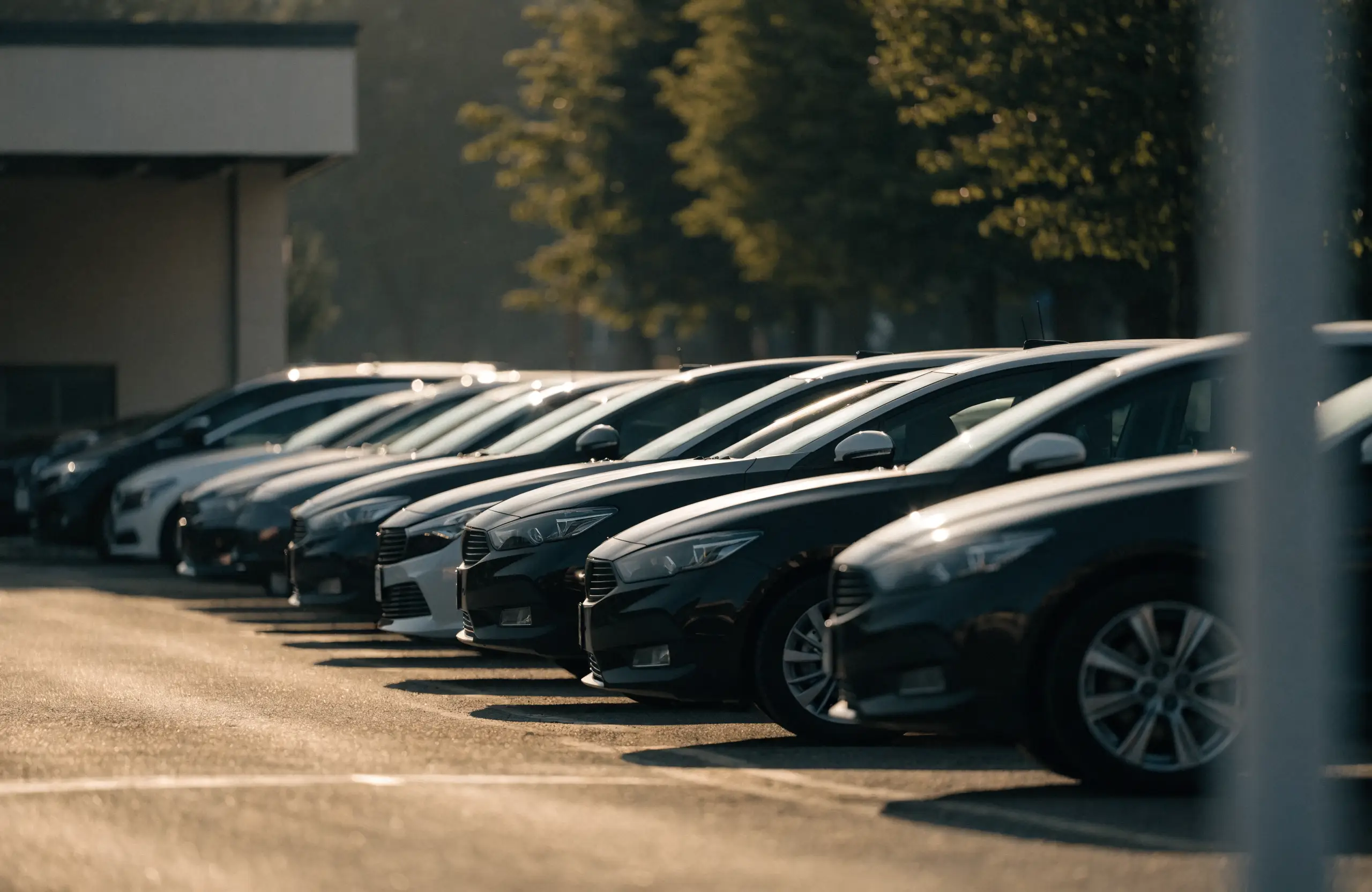
Vehicle Listing Ads fed by your live inventory
The single biggest lever in automotive marketing is connecting your advertising to your actual stock. The way to do that on Google is through Vehicle Listing Ads, served by Performance Max and fed by a live inventory feed through Google Merchant Center.
Here is why it matters. When your inventory feeds Merchant Center automatically, every car on the lot becomes an ad with its real price and photos, in front of people searching for exactly that make, model and price. When a car sells and drops out of your feed, its ad stops. You are not paying for clicks on sold vehicles, and a buyer never lands on a listing for a car that went last week. No one could keep that up by hand, updating ad copy forty times a day as stock turns over.
Done badly, with a stale or broken feed, this quietly burns budget on phantom stock. The feed is the foundation, and most dealers either do not have one or have one no one is watching.
Google and Meta tuned to real stock and your market area
Beyond the inventory feed, the rest of the paid program is about spending where your buyers actually are.
Google Ads covers the high-intent searches: people typing a model and a suburb, “near me” while standing in a competitor’s yard, finance and trade-in queries. The job is to bid on what converts, kill the searches that do not, and keep Performance Max from quietly absorbing people who searched for your dealership by name and were already coming in. That last one is a common leak. Our breakdown of what Google Ads cost in Australia covers the spend and waste mechanics.
Meta and Facebook Ads do a different job. People are not on Facebook to buy a car, but they are there, and inventory ads, video and retargeting put your stock in front of buyers earlier, then chase the ones who visited your site and did not enquire. Retargeting a buyer who looked at a specific ute and left is some of the cheapest, most effective spend a dealer has.
The thread tying both together is the Primary Market Area. A dealership sells to a catchment, not the whole country, so the fastest saving in most car dealer advertising is geography: clicks from people who will never drive to your yard are waste dressed up as reach. We tune targeting to the PMA, the suburbs and regions you genuinely draw from, so the budget buys buyers who can actually turn up.
| Channel | Its job | Skip it and… |
|---|---|---|
| Google Ads + Vehicle Listing Ads | Catch high-intent buyers searching a make, model or suburb now | You miss buyers at the moment of intent |
| Meta and Facebook Ads | Put stock in front of buyers earlier and retarget the ones who left | Warm buyers drift to whoever followed up |
| Local SEO | Win suburb and brand searches between campaigns | You pay for every visit forever |
| Dealership CRM + AI follow-up | Catch every lead and answer in minutes, not Mondays | Good leads go cold before anyone calls |
A dealer website that loads fast and converts
Every ad dollar lands somewhere, and for most dealers that somewhere is a slow, cluttered website that loses the buyer it just paid for. The best feed and the sharpest targeting are wasted if the page takes six seconds to load on a phone, which is where most car buyers are searching, often half-ready to call.
A dealer website earns its keep when it loads fast, shows current stock clearly, works on mobile and makes enquiring obvious. Vehicle detail pages need to load instantly, finance and trade-in calls to action need to be one tap away, and the contact form cannot be buried. That is the difference between a click that becomes an enquiry and a click that bounces, and it is where the paid budget either pays off or leaks away.

SEO for suburb and brand searches
Paid ads stop the day you stop paying. SEO is the work that keeps buyers finding you between campaigns, and for dealers it concentrates on two things: suburb searches and brand searches.
Suburb searches are buyers looking for a dealer or a model near where they live. Brand searches are people looking for the makes you carry. Ranking for both means a Google Business Profile that is complete and active, genuine recent reviews, consistent business details everywhere, and real pages for the brands and locations you serve. Car buyers research locally and visit in person, so local search works especially well for dealers. The same principles in our guide to local SEO and winning the map pack apply directly to a dealership, because the behaviour is the same: search nearby, shortlist, then go and look.

The follow-up moat: a CRM plus AI that answers in minutes
This is the part most dealers underinvest in, and it is where deals are won or lost. You can run perfect ads and still lose to a competitor who simply answered first. A buyer enquiring on a car is usually enquiring on three or four at once. The dealer who replies in minutes gets the conversation. The dealer who replies on Monday gets nothing.
The fix is a proper dealership CRM that catches every lead from every source in one place, so nothing falls between the website, the phones and the floor, and follow-up does not depend on who is rostered. That is why we built Odin Dealer, our Australian dealership CRM. It pulls leads together, keeps follow-up disciplined, and gives the yard one view of every buyer.
On top of the CRM, AI now closes the response-time gap humans cannot cover alone. AI calling and chat answer the buyer the moment they enquire, day or night, qualify them, book the appointment and hand a warm lead to the salesperson, instead of leaving a hot enquiry in an inbox until someone is free. Our own live chat product, ConversAI, does this on dealer websites, so the buyer who lands at 9pm on a Sunday gets a real answer then, not a missed-you call two days later. The point is not to replace your salespeople, it is to make sure no lead goes cold while they are with another customer.
Measure gross and days-in-stock, not clicks
The last shift is the most important and the hardest for an agency to be honest about. Clicks, impressions and even leads are not the scoreboard. A dealership lives and dies on gross and days-in-stock, and that is what the marketing should be managed to.
A campaign that drives a flood of low-quality enquiries on slow-moving stock is not a win, even if the click numbers look great. Marketing that shifts ageing units before they cost you more in floor plan, and brings in buyers who transact at a healthy margin, is doing its job. Anyone who points only at clicks is showing you the easy number, not the one that pays your wages.
Frequently asked questions
What is the best marketing channel for a car dealership?
There is no single best channel, there is a stack that works together. Google Ads and Vehicle Listing Ads catch high-intent buyers searching now, Meta puts stock in front of buyers earlier and retargets the ones who left, SEO brings in suburb and brand searches over time, and the CRM plus fast follow-up converts all of it. Skip any layer and the others leak.
Do dealerships still need a website if they advertise on the big car portals?
Yes. The portals send you leads but also send the same buyer to every competitor on the page, and they own the relationship and the data. Your own fast, current website is where your ads, SEO and brand searches land, where you control the experience, and where enquiries come straight to you instead of through a middleman taking a cut.
Why are my dealership leads not converting?
Most often it is response time, not lead quality. Car buyers enquire on several vehicles at once and go with whoever answers first. If leads scatter across forms, calls and messages with no single system catching them, and follow-up waits for whoever is rostered, good leads go cold before anyone calls. A CRM that catches every enquiry, plus AI that answers in minutes, fixes more than any ad change.
How does OEM co-op affect dealership advertising?
Manufacturer co-op programs help fund advertising but come with rules on brand messaging, approved creative and how the spend is structured. The campaign has to satisfy those guidelines and still sell cars, which are not always the same goal. The work is staying compliant with the OEM while keeping campaigns tuned to your stock and market area, not just running the manufacturer’s template and hoping.
Automotive is our flagship vertical. We build Odin Dealer, we run the ads, and we have worked across the sector with brands including Mazda, Subaru, BMW, Mini and Honda. If you want marketing tied to your live stock and your follow-up, not just a click report, look at how we approach marketing for car dealerships or our Google Ads management, and we will start by finding where your leads and budget are leaking.
Want marketing tied to your live stock and your follow-up?
Automotive is our flagship vertical. We build Odin Dealer, run the ads, and start by finding where your leads and budget are leaking, not by handing you a click report.